Kreuzberg · @carsten-busch-904667880 on pexels
Kreuzberg
This district draws visitors for its rich food culture, anchored by several market halls and a wide array of international grocery stores.
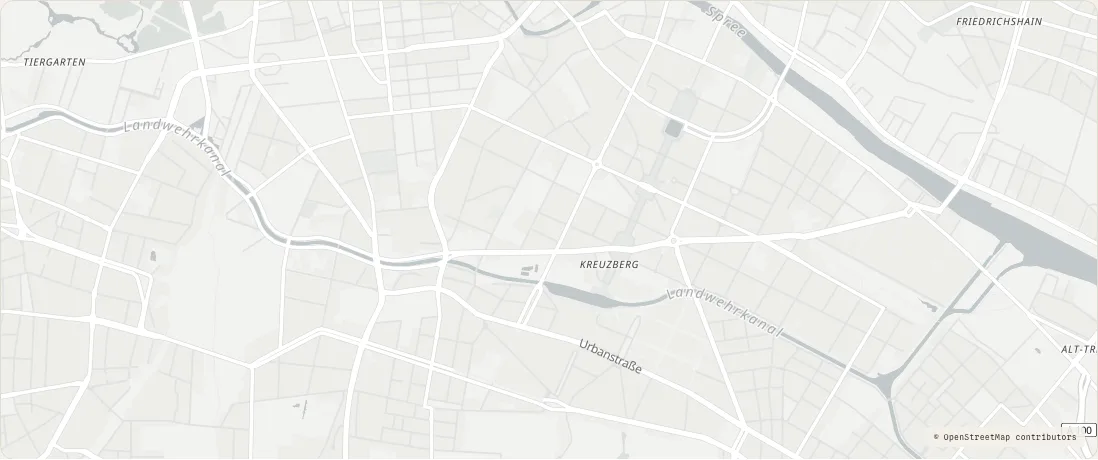
43 stores, plotted
Marheineke Markthalle
Marheineke Markthalle on Marheinekeplatz comes alive during lunchtime, offering a diverse array of international and regional dishes perfect for a satisfying midday meal in Kreuzberg.
Markthalle Neun
Markthalle Neun on Eisenbahnstraße comes alive on Thursday evenings for Streetfood Thursday, offering a chance to sample a wide array of international dishes.
Zora Supermarkt · Kreuzberg · Kottbusser Damm
Zora Supermarkt on Kottbusser Damm 93 offers a diverse selection of international groceries, moving beyond typical supermarket fare.
International Supermarket
International Supermarket on Oranienstraße offers a broad selection of Turkish products and a wide variety of fresh produce.
Elfi Supermarkt · Kreuzberg
Go to Elfi Supermarkt on Kottbusser Damm early in the morning to find the freshest produce and meat selections, ensuring the best choice before the day's crowds arrive.
Kräuterhaus Kreuzberg
Kräuterhaus Kreuzberg in Marheineke Markthalle offers an array of fresh herbs and spices, a fragrant stop for cooks and curious visitors.
Kreuzberg, in short
Kreuzberg is a central Berlin district, known for its diverse population and lively street scenes. It blends historic buildings with a contemporary atmosphere, particularly around the U-Bahn station Prinzenstraße.
Locals in Kreuzberg often shop at the district's various markets and supermarkets. The Marheineke Markthalle on Marheinekeplatz serves as a central point for fresh produce and prepared foods. Many residents visit the Ökomarkt Chamissoplatz on Saturdays for organic goods from local farmers. For daily needs, supermarkets like EDEKA Bergmannstraße and REWE on Skalitzer Straße stay open until midnight on weekdays, accommodating late schedules.
The shopping landscape here offers a mix of large supermarkets, specialty stores, and smaller convenience shops. You can find extensive Turkish products at International Supermarket on Oranienstraße, or Italian specialties at Olmo, Alimentari & vini on Mariannenstraße. Markthalle Neun on Eisenbahnstraße is another destination for international street food and local products. The area also has numerous Spätis, such as Kottiwood - Spätkauf on Adalbertstraße, for late-night essentials.
Kreuzberg sits in the heart of Berlin, south of Mitte, and connects to other areas via major thoroughfares. Its distinct character and concentration of diverse food options make it a destination for those interested in Berlin's culinary landscape.
Market Days
Visit Ökomarkt Chamissoplatz on Saturday for organic produce, or head to Markt am Maybachufer for international foods and crafts on select days. These open-air markets offer a direct connection to local farmers and producers.
Early Morning Rush
While some stores open early, many large supermarkets like EDEKA Bergmannstraße and REWE on Skalitzer Straße offer extended hours until midnight on weekdays. Late afternoon or evening can be a good time to visit without rushing.
Quick answers
What kind of groceries can I find in Kreuzberg?
You can find a wide range, from organic produce at LPG BioMarkt GmbH on Mehringdamm to Turkish and Asian groceries at ELFI Supermarkt on Kottbusser Damm. There are also many standard German supermarkets and specialty Italian items at Olmo, Alimentari & vini on Mariannenstraße.
Are there any late-night shopping options?
Yes, several supermarkets like EDEKA Bergmannstraße, REWE on Skalitzer Straße, and EDEKA Gerstmann on Stresemannstraße are open until midnight on weekdays. Numerous Spätis, such as Niche Spätkauf on Kottbusser Damm, also operate late into the evening.
What are the main market experiences here?
Kreuzberg hosts two market halls, Marheineke Markthalle and Markthalle Neun on Eisenbahnstraße, which offer fresh produce and international foods. There are also open-air markets like Ökomarkt Chamissoplatz every Saturday.
Note: store locations on maps are approximate to their actual locations; distances are based on straight lines, and pins are nudged if store pins collide. Nearest station data is based on © OpenStreetMap contributors, ODbL.